
Desk booking doesn’t fail because people don’t comply.
It fails because systems don’t fit real working patterns or ways of working.
The common assumption about deploying booking systems (and why it breaks)
The assumption behind most desk booking rollouts is simple:
“If we give people a tool and a policy, they’ll use it and follow it.”
On paper, this makes sense.
The intent is usually good — the system is there to help. In practice, this rarely plays out as expected.
Licences are purchased...
A system and workflows are set up...
Training is delivered...
Reports light up...
But behaviour doesn’t change in the way the data suggests it will.
Too often:
Desks look “booked” but sit empty
Rooms are reserved “just in case”, or people don’t show up
Recurring bookings linger long after patterns have changed
The problem isn’t intent or user deceit.
It’s system design.
Generic systems, unique organisations
A question: When you get into a new car, do you just start driving - because the car is designed to go on the road, be driven and to take you where you want to go?
No!
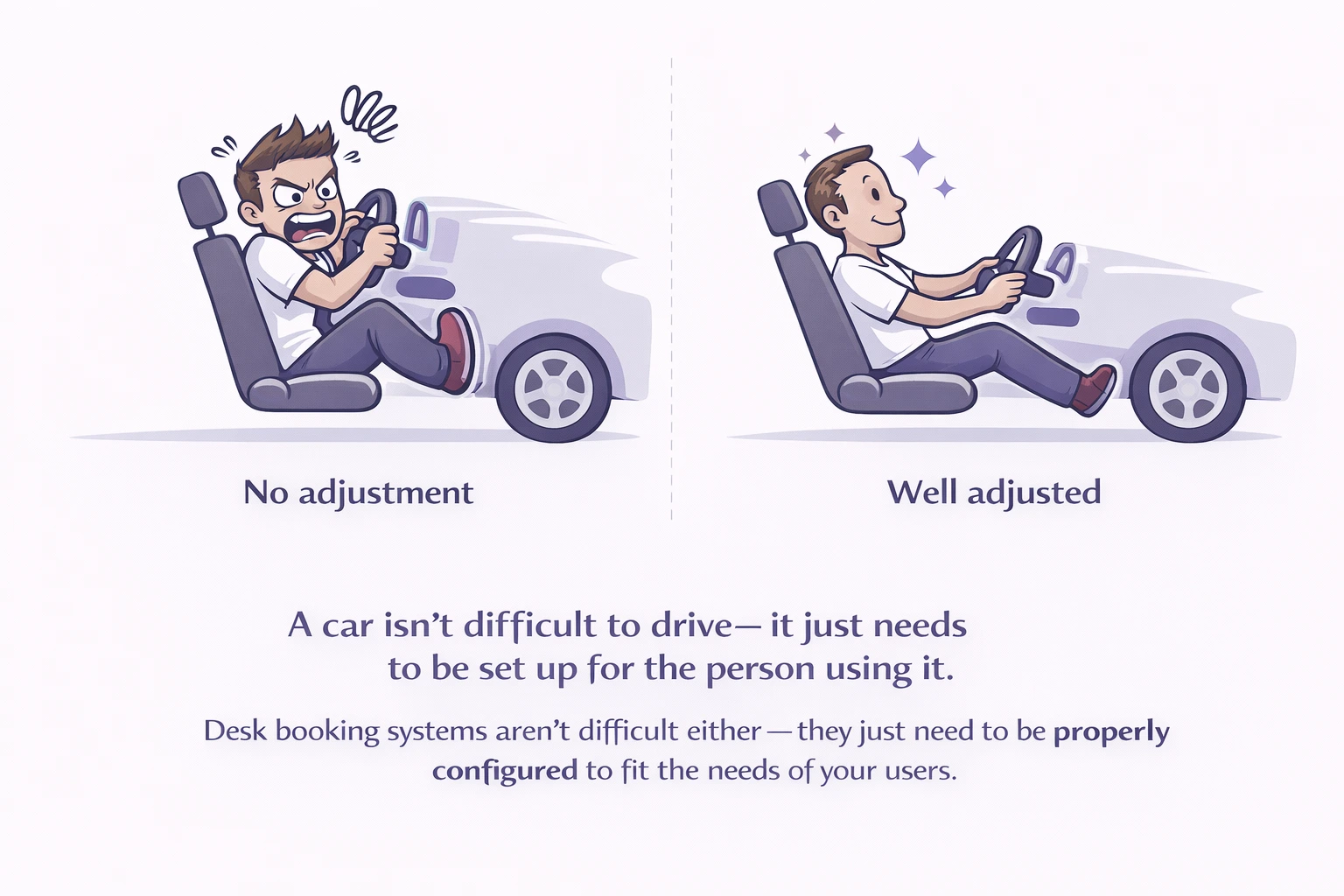
You adjust the seat.
You adjust the mirrors.
You make sure the car fits you and your driving position.
Otherwise, yes - the car will move - but it will be uncomfortable, distracting, and far harder to operate well.
A car isn’t difficult to drive - it just needs to be set up for the person using it.
The same applies to a space booking system. Most desk booking platforms are deployed as one-size-fits-all systems - because they are designed to book desks and rooms.
But no two organisations actually work the same way...
Some teams are highly predictable.
Others are fluid by design.
Some staff plan weeks ahead.
Others decide on the morning itself.
Some organisations are comfortable with enforcement.
Others rely heavily on trust and autonomy.
When setting up a desk booking system, if you assume:
everyone books proactively
everyone plans in advance
everyone uses the same process
everyone will tick the same boxes
everyone is comfortable with another app
...it will always struggle somewhere.
Just like driving a car, you need to make sure the system is set up and configured properly if you want people to use it effectively.
Software is generic.
Organisations aren’t.
It’s important to draw on real expertise to avoid the pitfalls generic booking processes can create - and to configure your booking system accordingly.
Where access design goes wrong
Access design is about how people enter the system.
This is often where problems start.
Common friction points include:
Separate logins or standalone apps
Manual booking as a daily requirement
Not accounting for unique user needs (such as permanently assigned spaces)
Booking being the first step, not a natural part of daily work
Treating all users as equally confident with consistent needs
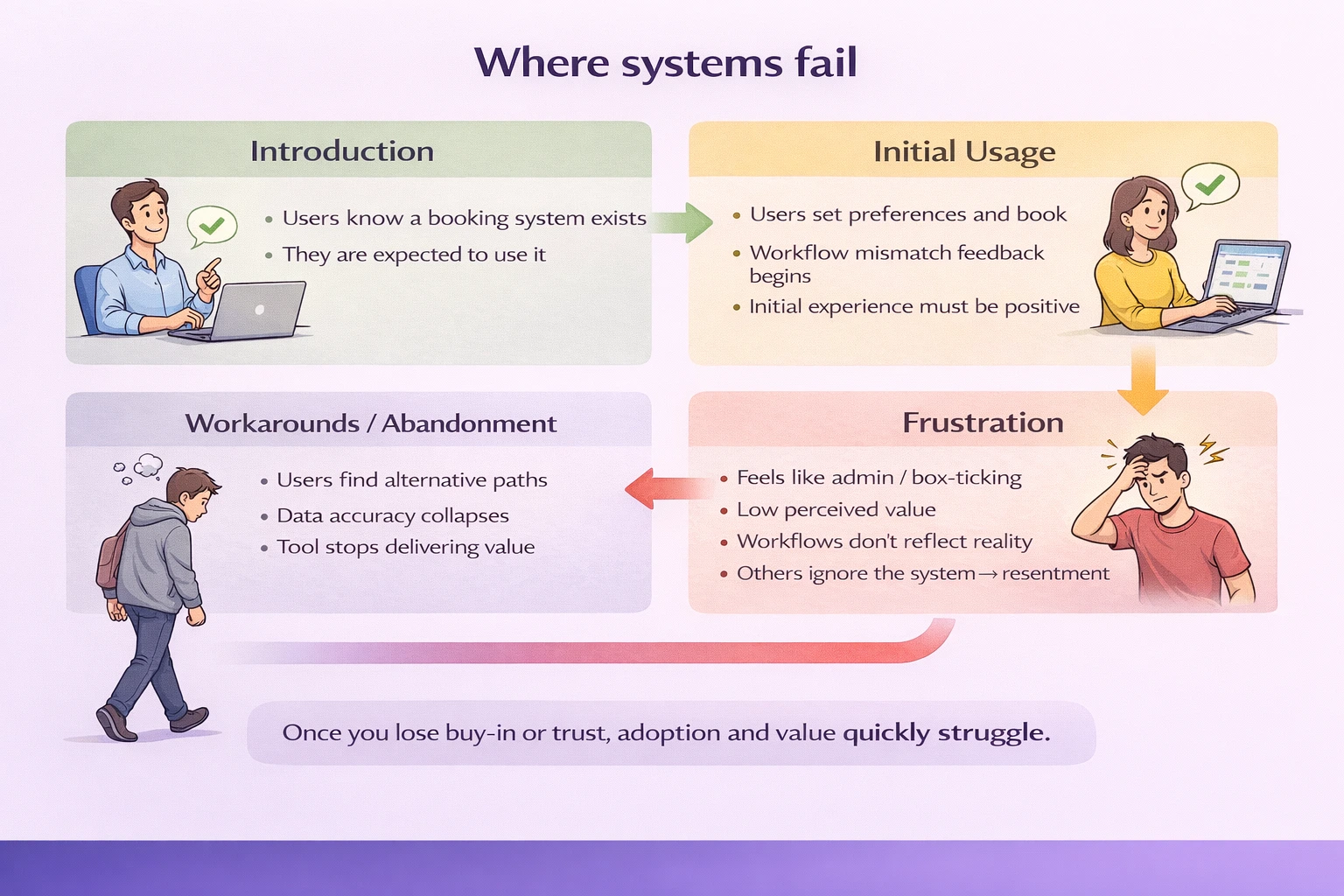
Each additional step out of an easy sequence increases friction.
Each extra decision reduces accuracy.
If using the system feels like thankless admin, people will minimise their interaction with it - or work around it entirely.
Where process design breaks down
Process design is about what the system expects people to do.
Most desk booking tools assume that:
people always know when they’re coming in
people care which desk they sit at
plans rarely change
updating bookings is part of the job
people will proactively go and book a desk
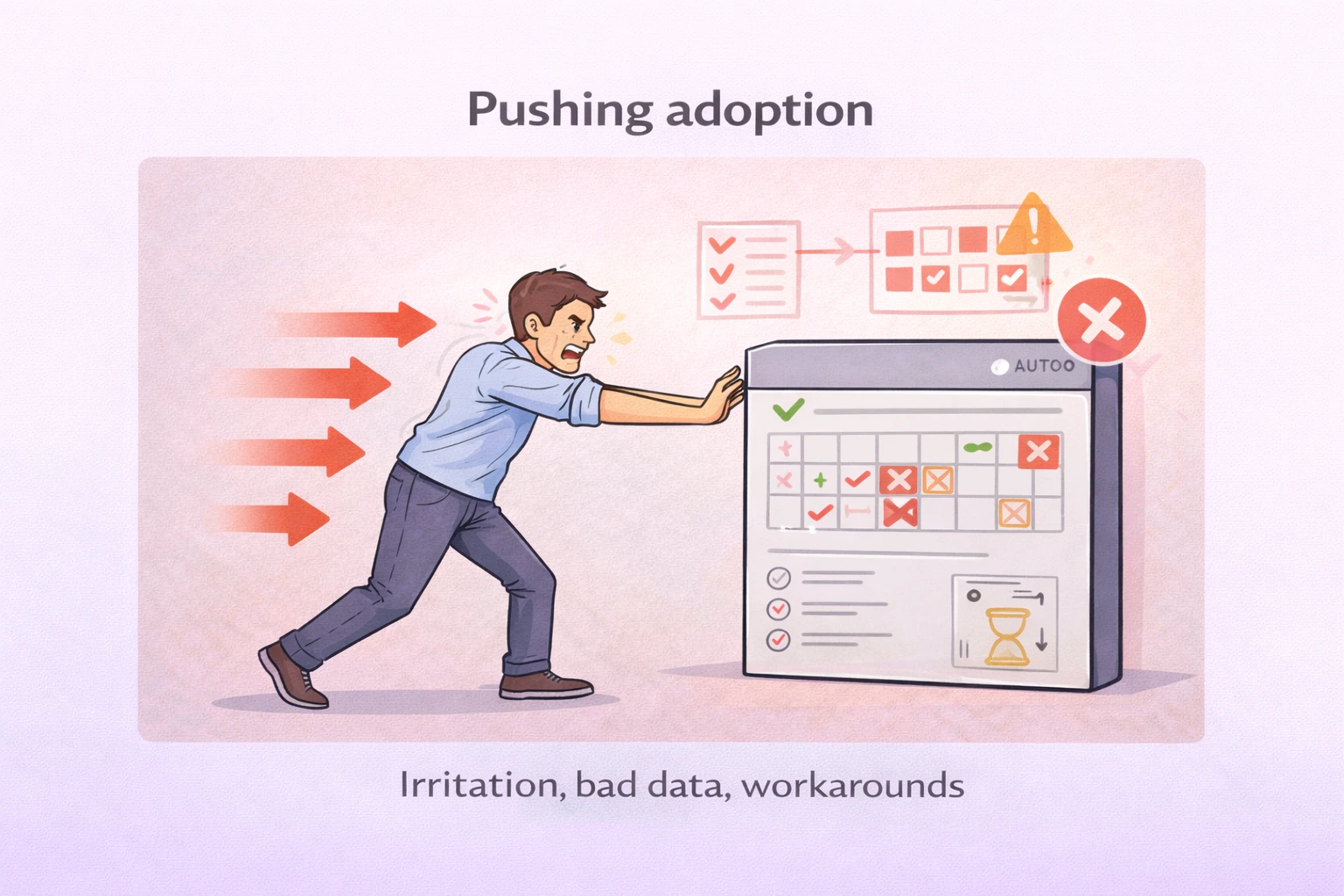
In reality:
plans shift constantly
proximity matters more than desk numbers
people prioritise outcomes, not administration
booking quickly feels optional
People just… don’t book.
So behaviour adapts — and accuracy suffers.
And the data you rely on to plan your space quietly disappears.
When systems don’t reflect real needs and realities, people create workarounds.
Those workarounds are what we later call “poor adoption”.
Adoption is an outcome, not a goal
This is the key shift in thinking.
Adoption isn’t something you push.
It’s something you earn - and evolve.
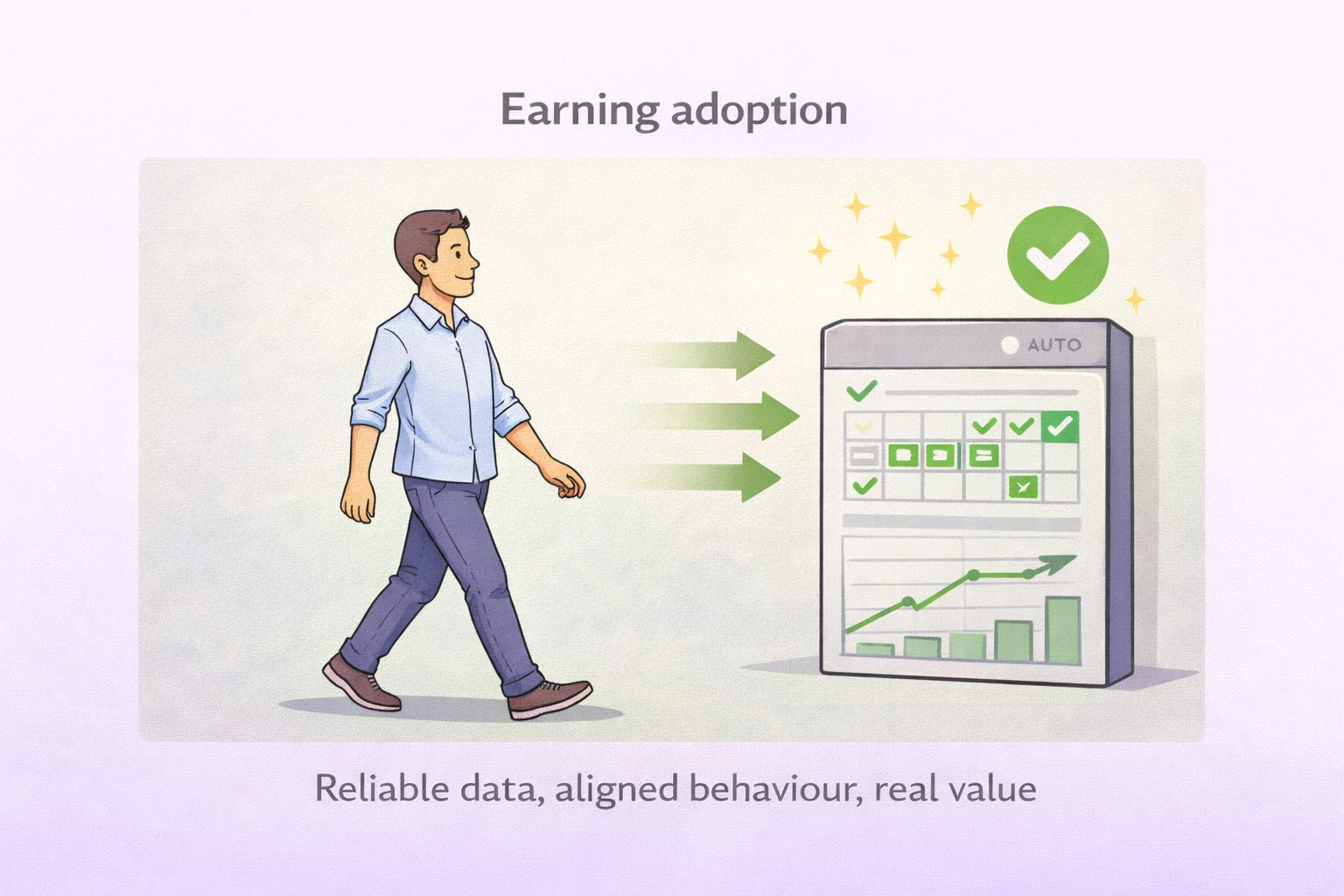
When access is easy, and the process mirrors real behaviour:
people don’t resist
data becomes reliable
ghost bookings fade away naturally
What looks like an adoption issue is usually a design issue revealing itself.
And critically, you need to be ready to adjust — not assume your day-one setup is where you’ll ultimately land.
The real cost of getting your desk booking setup wrong...
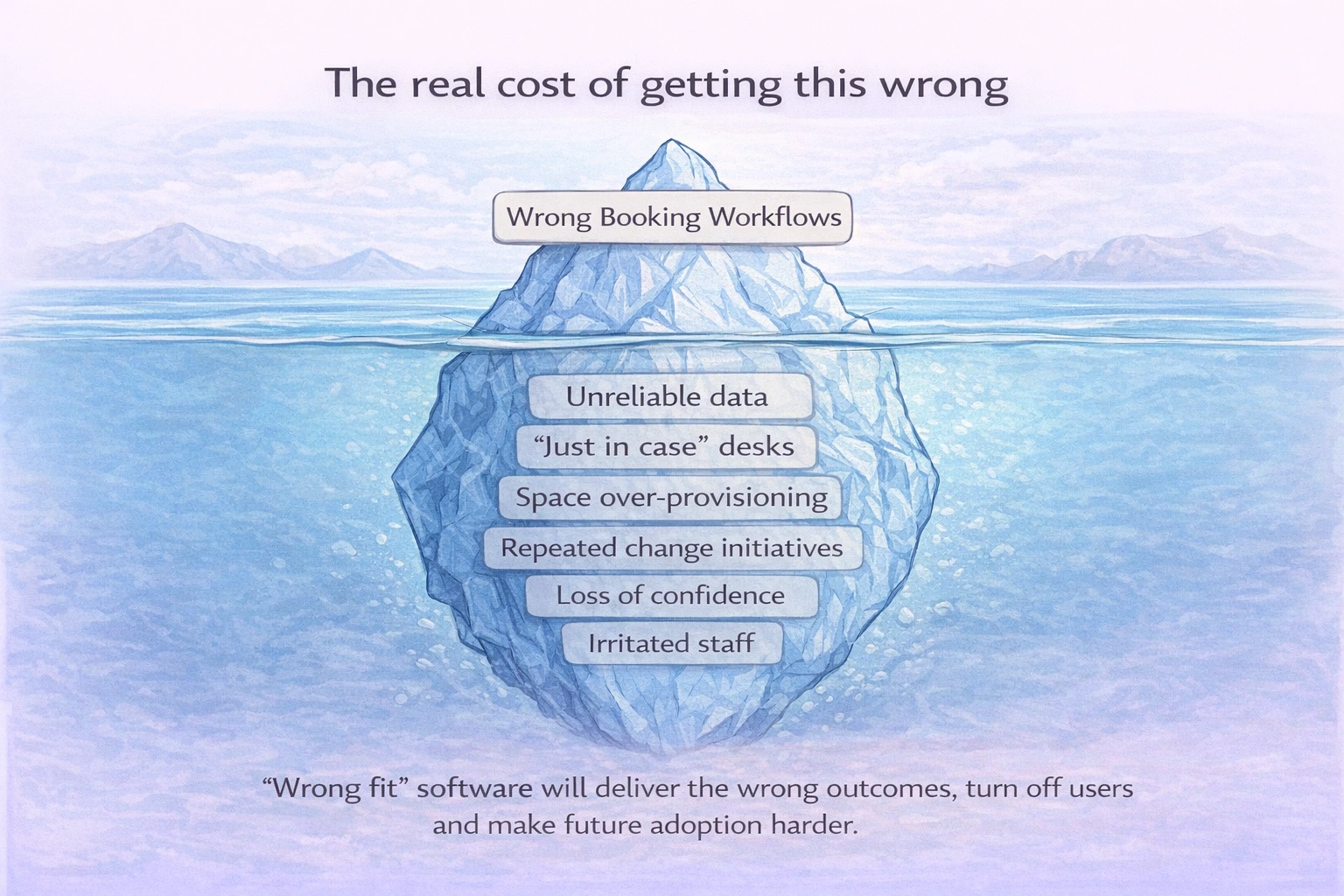
The cost of failed desk booking isn’t the wasted software licence fee.
It’s:
decisions made on unreliable data
desks given to teams “just in case”
space over-provisioned for the wrong reasons
repeated change initiatives to fix tooling problems
loss of confidence in future workplace projects
irritated staff
Cheap software that doesn’t work is expensive.
Value isn’t lost because software costs too much.
It’s lost because outcomes are wrong.
Why “here’s the software” isn’t enough
Some software providers stop at delivery:
licences issued
onboarding completed
documentation provided
At that point, success quietly becomes the customer’s responsibility.
But desk booking isn’t just a software deployment.
It’s a workplace system - and it needs to be tested, adjusted, and allowed to evolve.
It involves:
human behaviour
trust
evolving patterns
interpretation of data
iteration over time
Without expertise and ongoing ownership, even good tools struggle.
You need practical experience - not just a product.
What actually works: access & process design principles
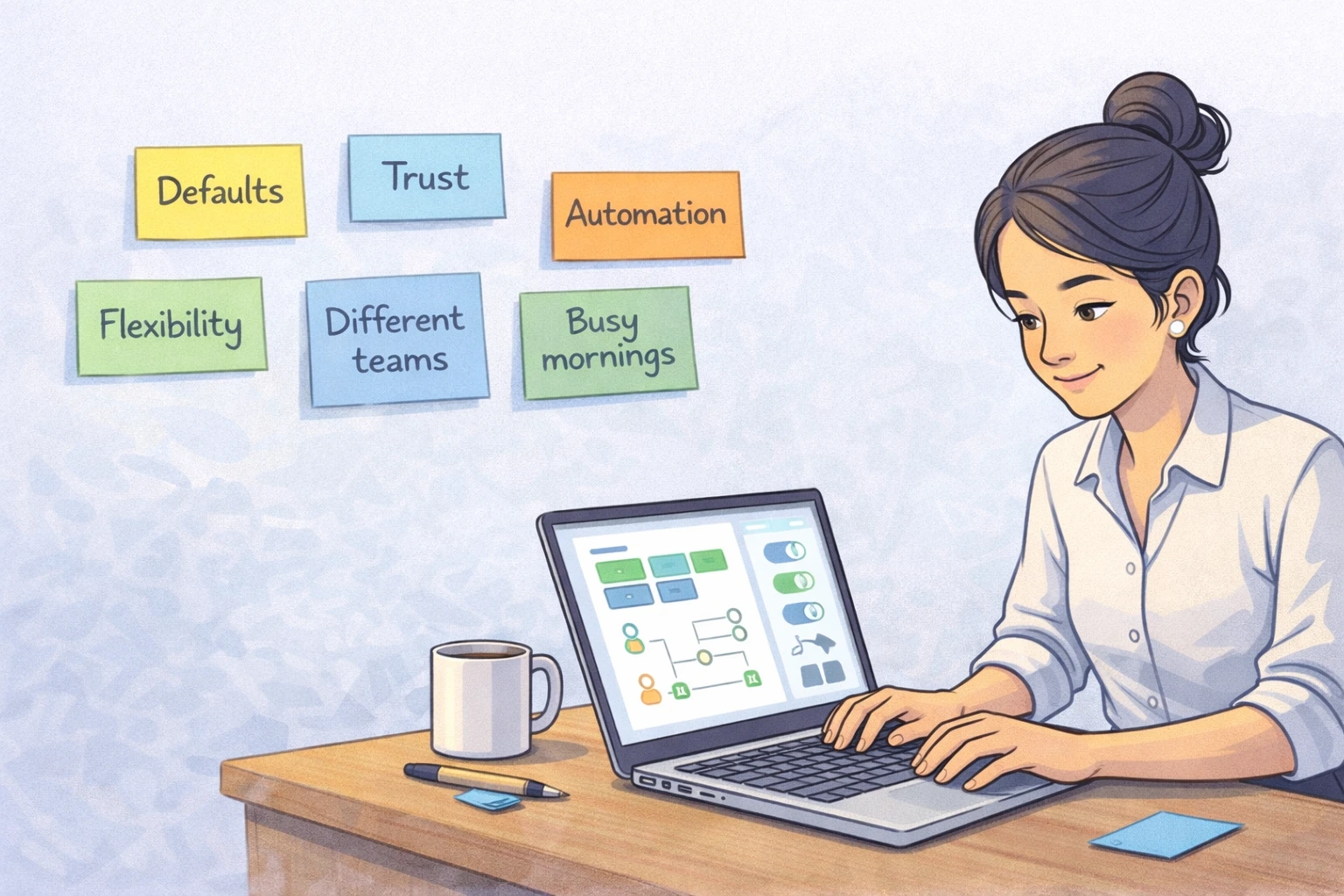
Across organisations that see consistent results, a few patterns repeat.
1. Meet people where they already work
Adoption improves when tools disappear into existing workflows.
2. Assume variability, not consistency
Good systems expect change — and adapt to it.
3. Default intelligently
Remove unnecessary decisions. Automate reversals.
4. Design for trust, not control
Fear produces compliance theatre, not accuracy.
5. Let the system adapt to the organisation
Not the other way around.
Why this matters more in charities and the public sector
Charities and public bodies operate under different pressures:
intense budget scrutiny - we know every penny really counts
limited tolerance for wasted effort and resource
mixed digital confidence
sensitivity around monitoring and control
strong human, relationship-led cultures

In this context, heavy-handed or generic systems fail faster - and do more damage.
In cost-constrained organisations, value isn’t about paying less.
It’s about wasting less.
The role of a genuine partner
The most effective organisations don’t just buy software.
They work with partners who:
understand how their organisation works
help design access around real workflows
adapt processes as patterns evolve
interpret data collaboratively
invest in long-term success, not short-term deployment